

WRC 2027 Celica Return — Toyota's rally revolution special | By Paul Chappell, Founder, SIMPRO Academy Phuket | 16 November 2026 | 9 min read
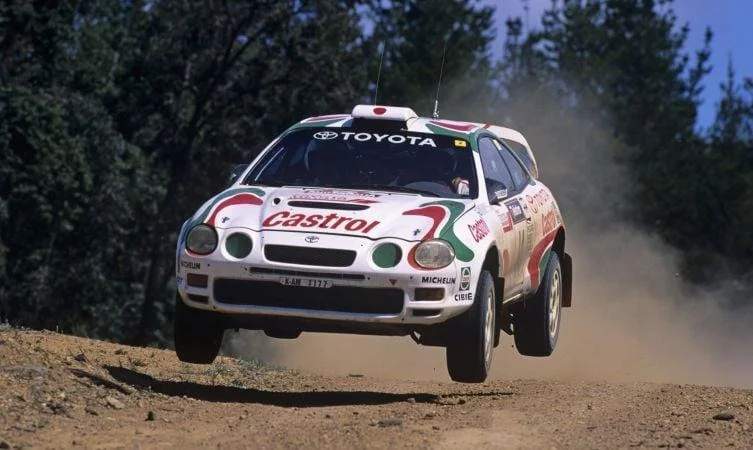
The WRC 2027 Celica return is the story reshaping rally for next season: Toyota has confirmed it will split its factory effort into two separate works teams running two different homologated cars for the first time in a generation, and the Toyota Celica nameplate is coming back to a World Rally Championship start line for the first time since the 1990s. Announced on 3 November 2026 at a launch event in Finland, the plan sees reigning champion Elfyn Evans lead a new “Toyota Racing” squad built around the GR Celica Rally1, alongside 2026 runners-up Oliver Solberg and Sami Pajari, while a second team — Gazoo Racing Toyota — fields the familiar GR Yaris Rally1 for a reunited line-up of Ott Tänak and Kalle Rovanperä, both returning after time away from full-time competition (source: Racer, Autosport).
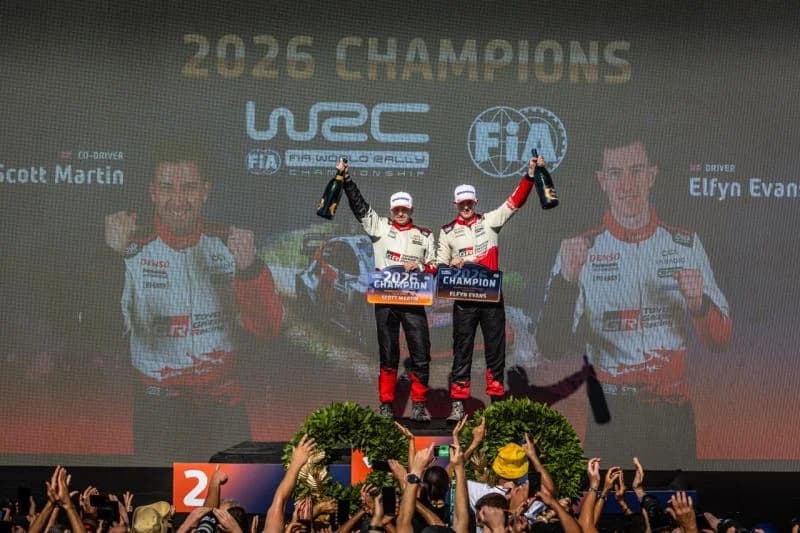
For anyone who has just watched Elfyn Evans become Britain's first WRC world champion since 2001 in October's Rally Italia Sardegna decider, the WRC 2027 Celica return answers the obvious next question: what happens to the sport that produced one of the tightest title fights in its history? At SIMPRO Academy Phuket, we track every twist of this story closely — our EA Sports WRC Rally and Assetto Corsa Rally platforms, running on Simucube 2 Pro direct-drive wheelbases and Simtrecs load-cell pedals, let guests feel exactly the kind of car-handling debates (spaceframe chassis, cost-capped components, two-car strategy) that are about to define the next generation of the real sport.
Inside Toyota's Two-Team, Two-Car Strategy
Toyota's decision to run the GR Celica and GR Yaris simultaneously is deliberately unusual for a championship where manufacturers have typically committed to one homologated car. Team principal Jari-Matti Latvala explained the call as a way to double Toyota's product storytelling and fan engagement heading into the new WRC27 Rally1 era, rather than a simple reaction to rivals (source: Autosport, “Toyota explains call to run different car models in WRC 2027”). The Toyota Racing crews confirmed for the GR Celica are Evans/Scott Martin, Solberg/Elliott Edmondson and Pajari/Marko Salminen — effectively the top three finishers from the dramatic 2026 standings (Evans 243, Solberg 238, Pajari 237) moving as a unit into the new car.
Gazoo Racing Toyota's GR Yaris squad brings back two of the sport's biggest names: Ott Tänak, the 2019 world champion, and Kalle Rovanperä, the two-time champion who has spent the past year on a reduced programme, both return to full works machinery alongside Takamoto Katsuta, who finished sixth in the 2026 championship. Full confirmation of every seat took several news cycles to settle — some outlets initially placed Katsuta in the Celica squad before Autosport and Racer clarified he partners Tänak and Rovanperä in the Yaris team (source: Racer, “Toyota to field two works WRC teams with different cars”; Autosport, “Toyota announces WRC 2027 line-up with Rovanperä and Tänak returning”). Nine-time champion Sébastien Ogier, by contrast, is absent from the full-season announcement altogether: Toyota expects him to contest no more than three rallies in 2027, and Ogier has already confirmed he will skip the Monte Carlo season opener for the first time since 2011 (source: Autosport, “Ogier set for partial WRC 2027 programme”; “Ogier to skip WRC 2027 opener”).
What the New WRC27 Rally1 Regulations Actually Change
The two-car gamble only makes sense alongside the regulatory reset underpinning it. The FIA's World Motor Sport Council has approved a cost cap of roughly €345,000 per car under the new WRC27 Rally1 framework — about half the current Rally1 budget — built around a spaceframe chassis using Rally2-level engines, transmissions and brakes rather than today's more exotic hybrid Rally1 package (source: Motorsport.com, “FIA reveals final details of WRC 2027 regulations”; Autosport, same). Reported power output sits in the 290-300bhp range depending on torque-map settings, a deliberate step down in complexity designed to let more manufacturers and private teams build a competitive car without the hybrid-era cost spiral that squeezed grids over the past several seasons.
Crucially, the WRC27 rules leave the door open for internal combustion, hybrid or fully electric powertrains within the same cost envelope, with hybrid units expected to return once sustainable-fuel-only cars have bedded in (source: Jalopnik, “WRC Tearing Up Its Rulebook For 2027 To Allow Wider Mix Of Rally Cars And Powertrains”). A new homologation is valid for ten years, and any manufacturer entering a WRC27 car must contest at least half of the season's rounds with a minimum of two cars — rules designed explicitly to attract the kind of second-manufacturer and privateer interest that has been scarce since Hyundai and M-Sport became the only full-time rivals to Toyota. Not every manufacturer is convinced: Hyundai's management has said it is not yet persuaded a Rally2-based engine formula suits a flagship category, while Thierry Neuville has voiced concern about a Rally1 class built on what is fundamentally Rally2 underpinnings (source: Motorsport.com, “How WRC's crucial 2027 rules are falling into place”).

Why the WRC 2027 Celica Return Matters for Sim Racing in Phuket
The WRC 2027 Celica return gives sim racers and motorsport tourists in Phuket a genuinely new car to anticipate, and it is exactly the kind of regulation change that ripples straight into sim racing software: EA Sports WRC Rally and Assetto Corsa Rally both model homologated Rally1 machinery stage by stage, and title updates traditionally follow real-world homologation within a season or two. At SIMPRO Academy Phuket, guests can already drive the current-generation GR Yaris Rally1 and its rivals across rally stages including Monte Carlo, Rally Finland, Rally Portugal, Wales Rally GB, Rally Australia, Safari Rally Kenya and Rally Chile — a genuine taste of the terrain Evans, Tänak and company will be tackling as the WRC27 era begins.
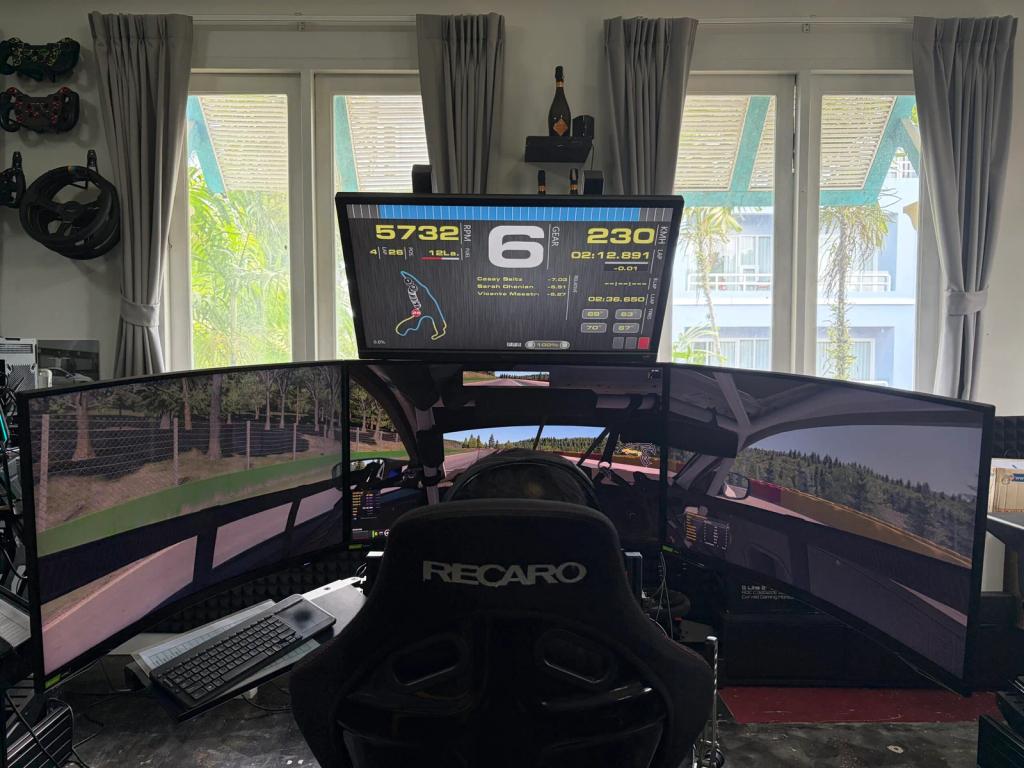
Our triple 32-inch curved monitor sim racing rig, built around a Simucube 2 Pro direct-drive wheelbase (25 Nm) and Simtrecs load-cell pedals, is engineered to transmit exactly the kind of surface feedback — loose gravel, camber changes, mid-corner weight transfer — that makes rally driving uniquely demanding compared with circuit racing. Whether you are a visiting tourist curious what 300 horsepower and a spaceframe chassis actually feels like at pace notes speed, or a long-time WRC follower who wants to debate the Celica-versus-Yaris strategy in person, a 60-minute coached session puts you behind the wheel of the same discipline Toyota is about to reinvent. Founder Paul Chappell's own professional rally driver training course gives our coaching sessions a firsthand grounding in car control that goes well beyond a typical arcade rig. If you're new to the hobby entirely, our beginner's guide to getting started with sim racing is the best place to start.
Book a 60-minute sim racing session at SIMPRO Academy Phuket: 1,300 THB per 60 minutes (add 30 minutes for +500 THB), or 2,000 THB per hour for 1-on-1 coaching with telemetry debrief — both all-inclusive (incl. 7% VAT and 3% booking fee). Drive the Simucube 2 Pro direct-drive rig with Simtrecs load-cell pedals on triple 32-inch curved monitors.
What to Watch as the WRC 2027 Season Approaches
Three storylines will define the build-up to the 2027 season opener. First, car development: Toyota's drivers — Tänak especially, given his technical feedback reputation — have already been logging test mileage in the new GR Yaris and GR Celica prototypes, with Dirtfish reporting increased testing allocations for Toyota's full driver roster through the winter (source: Dirtfish, “Toyota's rally drivers to increase 2027 testing”). Second, the expanded calendar: the FIA has confirmed a 15-round 2027 World Rally Championship, up from 13 in 2026, opening with the 95th Rallye Monte-Carlo (21–24 January 2027) and featuring two landmark returns — WRC's first visit to the United States since 1988, a late-August round built around gravel stages in Tennessee and Kentucky, and the championship's first visit to Britain since 2019 via a new three-year Rally Scotland deal based in Aberdeen (source: Autosport, “WRC expands 2027 calendar to 15 rounds as USA, UK return”; Racer, “WRC confirms return to U.S. for 2027”; FIA, “WRC set for UK return with Rally Scotland from 2027”).
Third, the human story: Sébastien Ogier's reduced role leaves a nine-time champion on the margins of a grid for the first time in his career, while Rovanperä and Tänak return to full-time machinery after each stepping back from the sport's relentless travel schedule in recent seasons. Whichever car wins more often in year one of the WRC27 regulations — the all-new Celica or the evolved Yaris — will shape manufacturer strategy for a decade, since each homologation is locked in for ten years under the new rules. For SIMPRO's tourist and global-fan audience alike, the Rallye Monte-Carlo season opener in January gives everyone a concrete date to watch the WRC 2027 Celica return finally hit a competitive stage.

2027 WRC Toyota Driver Line-Up and Key Dates
| Detail | Confirmed Information |
|---|---|
| Toyota Racing (GR Celica Rally1) | Elfyn Evans/Scott Martin, Oliver Solberg/Elliott Edmondson, Sami Pajari/Marko Salminen |
| Gazoo Racing Toyota (GR Yaris Rally1) | Ott Tänak, Kalle Rovanperä, Takamoto Katsuta |
| Sébastien Ogier | Expected to contest 3 rallies or fewer; confirmed absent from Monte Carlo opener |
| 2027 cost cap (WRC27 Rally1) | Approx. €345,000 per car |
| Reported power output | Approx. 290-300 bhp |
| Homologation validity | 10 years |
| 2027 calendar | 15 rounds (up from 13 in 2026) |
| Season opener | 95th Rallye Monte-Carlo, 21–24 January 2027 |
| New rounds | Rally USA (Tennessee/Kentucky gravel, late August) and Rally Scotland (Aberdeen, first UK round since 2019) |
Sources
- Racer — “Toyota to field two works WRC teams with different cars”
- Autosport — “Toyota explains call to run different car models in WRC 2027”
- Autosport — “Toyota announces WRC 2027 line-up with Rovanperä and Tänak returning”
- Autosport — “Ogier set for partial WRC 2027 programme”
- Autosport — “Ogier to skip WRC 2027 opener”
- Autosport — “WRC expands 2027 calendar to 15 rounds as USA, UK return”
- Racer — “WRC confirms return to U.S. for 2027”
- Motorsport.com/Autosport — “FIA reveals final details of WRC 2027 regulations”
- FIA — “WRC set for UK return with Rally Scotland from 2027”
- Jalopnik — “WRC Tearing Up Its Rulebook For 2027 To Allow Wider Mix Of Rally Cars And Powertrains”
- Dirtfish — “Toyota's rally drivers to increase 2027 testing”
Visit SIMPRO Academy Phuket at 23 Boat Lagoon Marina, Soho Pool Club, Moo 2, Koh Kaeo, Ampur Mueang, Phuket 83000.
+66 62 962 2822 | info@simproacademyphuket.com
1,300 THB per 60-minute sim session (add 30 minutes for +500 THB), or 2,000 THB per hour for 1-on-1 coaching — both all-inclusive.
About the Author
Paul Chappell is Founder and Operator of SIMPRO Academy Phuket. With 23+ years as a professional airline pilot, including a Lead Captain position on a Boeing Business Jet where he managed flight training and checking responsibilities, Paul brings deep expertise in precision performance and simulator-based training. He is a Qualified Flight Instructor with thousands of hours on certified full-motion flight simulators. Beyond aviation, Paul is a lifelong motorsport enthusiast — 10+ years on high-performance motorbikes, multiple track days in an AMG 45S, a professional rally driver training course, and extensive go-kart racing. He founded SIMPRO Academy in 2024 to bring professional-grade sim racing and flight simulation training to Southeast Asia.