
May 27, 2026
Do you know the factor on which training depends? Training in high-precision environments depends on one critical skill, and that is spatial awareness. Whether someone is learning cockpit procedures, driving techniques, or reaction-based motorsport skills – the ability to understand position, movement, and orientation is vital.
Here comes the modern simulation technology that is showcasing and transforming the way skill is developed in the recent scenario.
With 360° virtual reality (VR) and haptic feedback systems, trainees can experience realistic environments where control inputs, motion, and physical responses are closely imitated. These technologies are increasingly used in aviation, driving simulations, and motorsport training spaces such as gokarting Thailand facilities and Sim racing Phuket venues, where the go-kart track is a simulation experience designed to sharpen reflexes and spatial judgment.
Simulation technology has changed the technological advancements from simple visual displays to fully immersive environments. A 360° VR system surrounds the trainee with a panoramic visual field that replicates real-world viewpoints. When these technological advancements are paired with haptic feedback, the experience becomes surreal. Vibrations, pressure responses, and tactile cues are delivered through steering controls, seats, and interfaces. These signals help trainees perceive how their actions can be impactful through movement and balance.
Much like flight simulators used in aviation training, the system allows repeated practice of control inputs and movement patterns without operational risk.
For the full breakdown of how spatial-awareness training works, read our 2026 guide to VR & haptic spatial-awareness training.
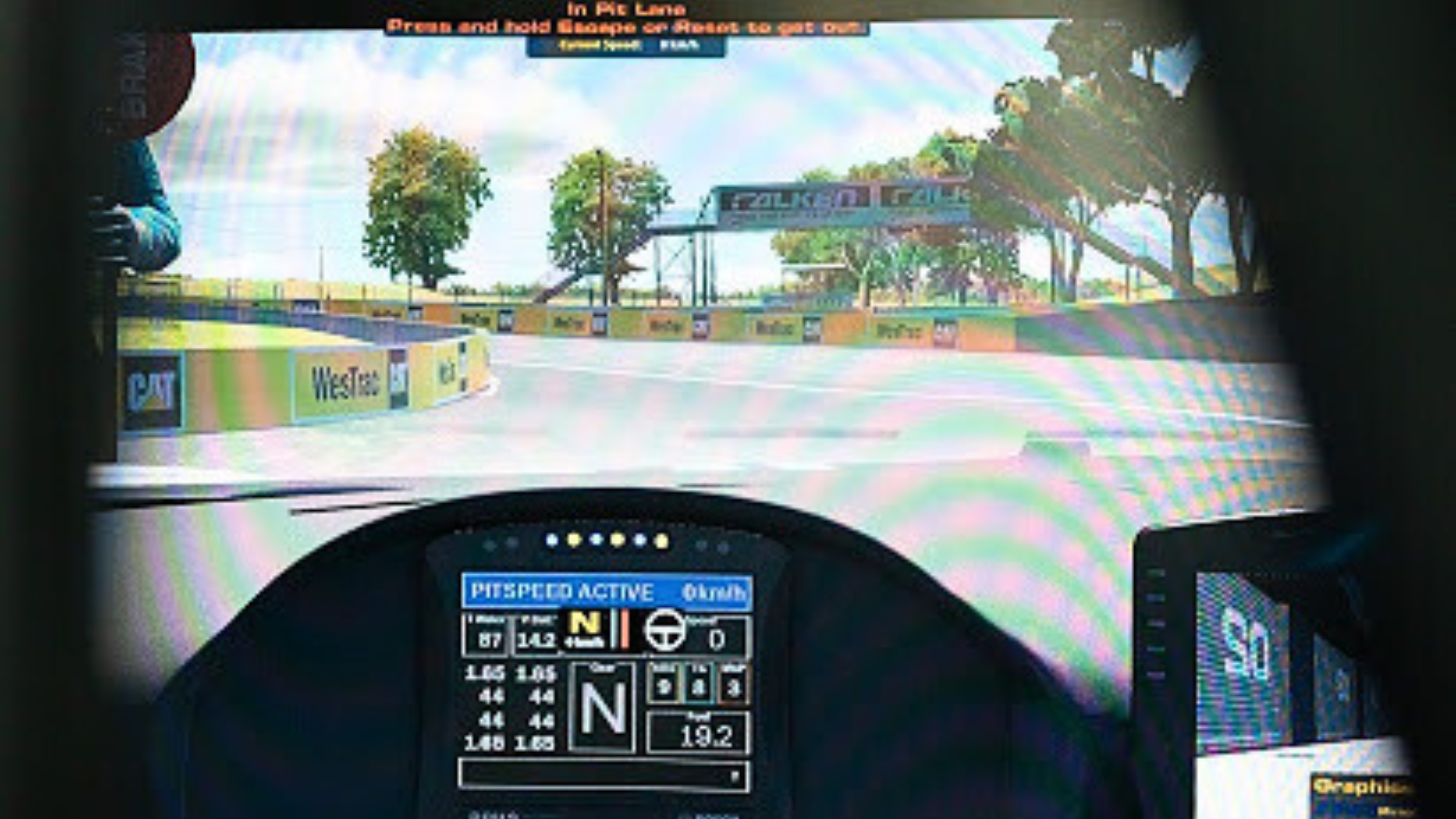
The concept behind simulation training remains consistent across industries. In aviation, pilots depend on instrument scanning, situational awareness, and system monitoring to maintain safe flight operations. Similarly, motorsport training requires awareness of speed, braking points, cornering angle, and track positioning.
Also, VR and haptic incorporation allow many signals to be practiced repeatedly. Steering corrections, reaction timing, and positional awareness gradually become natural.
Now, you may ask a question: “What is the role of immersive training?” Here, you need to keep in mind that across gokarting Thailand, training environments are increasingly engineered to reflect professional simulation methods used in aviation and performance driving.
Participants enter a well-structured learning environment where coaching, track design, and control feedback work together to form a consistent driving technique.
On the other hand, the haptic steering systems simulate resistance during turns. VR visualization can recreate track depth and motion cues.
How does this approach work?
This approach improves focus, coordination, and reaction speed. Also, repetition allows trainees to maintain smoother cornering lines, refine braking points, and enhance spatial judgement while navigating the circuit. In these spaces, the track becomes more than entertainment. It becomes a training platform where technical skill development takes place.
If you want to look for kid-friendly racing in Phuket, then you must have an idea that many venues offer kids-friendly racing in Phuket. This introduces simulation concepts in a protected and controlled way. For instance, the younger drivers learn basic spatial awareness such as track positioning, steering control, and obstacle recognition.
Want to know what VR-supported environments allow instructors to do? These environments decode racing lines, braking zones, and reaction timing more clearly.
Just because a structured setting gets repeated through responses and movements, learning becomes progressive here. Over time, participants develop improved coordination, concentration, and confidence. The same learning principle used in aviation simulators applies here: practice builds consistency.
Now, if you want to measure the importance of the technological advancements, you need to look at the focus, performance, and consistent skill development that’s taking place. Always understand that the true advantage of VR and haptic-based simulation lies in measurable improvement. When trainees experience visual depth, tactile response, and real-time control feedback together – their spatial awareness develops faster.
In training environments like Phuket simulation spaces, participants can practice repeatedly while receiving guidance from instructors. Reaction times improve, steering inputs become smoother, and decision-making becomes more confident.
This structured method makes sure that on a random basis, the process of learning can never be completed. In place of that, every session can contribute to skill refinement, focus, and performance consistency.
At SIMPRO Academy our racing rigs are built for realism: Simucube 2 Pro direct-drive wheelbases, load-cell pedals, and 32-inch curved triple monitors backed by a live telemetry display, with optional VR for full immersion. In VR your sense of depth, distance and car placement sharpens quickly — exactly the spatial awareness that carries across to real driving.
Want to feel it for yourself? Explore our sim racing sessions, or read how sim racing skills carry over to real racing.
Book a session at SIMPRO Academy, inside Soho Pool Club at Boat Lagoon Marina — open daily 9am–9pm. Call +66 62 962 2822 or email info@simproacademyphuket.com. Sessions from 1,300 THB.
Haptic feedback offers tactile signals that help trainees perceive motion, resistance, and control response in simulated environments.
A 360° VR system surrounds the user with panoramic visuals that replicate real-world perspectives and movement cues.
Yes, synchronized tactile feedback can help the brain support physical sensations with visual motion that lowers the chance of disorientation.
The primary differences are found thus: haptic-integrated VR adds physical sensations and control feedback, which creates a more realistic and immersive training environment.
Spatial awareness helps experts interpret movement, positioning, and environmental cues accurately during complex tasks.
After describing the technical progress in simulation training, you can identify that the combination of 360° VR and haptic feedback is redefining how spatial awareness is trained. Also, you can find that, from cockpit procedures to sim racing in Phuket, and across gokarting Thailand training environments, immersive simulation allows participants to sharpen reaction skills, improve precision, and develop confidence through well-defined practice.
At the center of this evolution, Simpro Academy Phuket represents how modern simulation facilities bring these technologies together in a focused learning environment, allowing trainees and enthusiasts to experience highly realistic practice scenarios designed to improve both technical ability and situational awareness.
Are you ready to experience how modern simulation technology transforms training? If yes, then the next step may not be in the real cockpit or on the track — but inside the immersive world of simulation waiting just for you!
Pual Chappell is Founder and Operator of SIMPRO Academy Phuket. With 23+ years as a professional airline pilot, including a Lead Captain position on a Boeing Business Jet where he managed flight training and checking responsibilities, Paul brings deep expertise in precision performance and simulator-based training. He is a Qualified Flight Instructor with thousands of hours on certified full-motion flight simulators. Beyond aviation, Paul is a lifelong motorsport enthusiast — 10+ years of high-performance motorbike riding, multiple AMG track days, a completed professional rally driver training course, and extensive go-kart racing. He founded SIMPRO Academy Phuket in 2024.
Reach Paul: info@simproacademyphuket.com | +66 62 962 2822
Leave a Comment: