

PPL & CPL procedural training is the most underused, cost-saving tool in modern flight training — here’s exactly how it works.
By Paul Chappell, Founder & Operator, SIMPRO Academy Phuket · June 2026 · 8-minute read
Paul Chappell is a 23-year professional airline pilot, former Lead Captain on a Boeing Business Jet, and previously an ICAO-qualified Flight Instructor. He founded SIMPRO Academy Phuket in 2024
PPL & CPL procedural training is the most underused tool in modern flight training. Every approved sim hour reduces the aircraft hours you need to log, saves you 4,000–6,000 THB per substituted hour, and produces measurably faster trainees. Done wrong, it’s expensive practice that doesn’t count toward your licence. This guide explains exactly what procedural training at SIMPRO covers, which hours count, and the five procedures the sim fixes faster than any aircraft can. |
PPL & CPL procedural training is something I’ve watched flight schools get wrong for years. After 23 years as a professional airline pilot — Lead Captain on a Boeing Business Jet, Chief Pilot overseeing training, and previously an ICAO Doc 9868-aligned qualified flight instructor — I’ve watched students waste money on aircraft hours for procedures that a simulator handles better, faster, and for a fraction of the cost.
PPL vs CPL: What’s the Actual Difference?
The two licences sit at different levels of the same pathway. PPL gets you flying for personal use; CPL gets you flying for hire. Both require theoretical knowledge, flight hours, medical fitness, and check-ride exams.
| Aspect | PPL — Private Pilot Licence | CPL — Commercial Pilot Licence |
|---|---|---|
| Minimum age | 17 | 18 |
| Minimum flight hours | 40–45 hours (ICAO; some authorities require more) | 200 total — with specific PIC, cross-country, night, instrument breakdowns |
| Medical class | Class 2 | Class 1 |
| Theoretical exams | 5–7 subjects (varies by authority) | 14 ATPL theory subjects (Frozen ATPL alongside CPL) |
| Privileges | Fly single-engine for personal use, daytime VFR | Fly for hire — instructing, charter, surveying, airline First Officer |
| Sim hours credit | Up to 5 hrs (most authorities) | Up to 10 hrs (CAAT/FAA); 5 hrs EASA Modular; more for IR add-on |
| Typical duration (full-time) | 4–8 months | 12–18 months from PPL |
| Estimated cost (Thailand, 2026) | ~600,000–900,000 THB | ~2.5–4 million THB (with PPL + IR + ME) |
| Hour minimums are ICAO baseline values. CAAT (Thailand), EASA, FAA, and other authorities apply additional requirements. Costs are 2026 indicative ranges in Thailand. | ||
What a PPL & CPL Procedural Training Session Looks Like
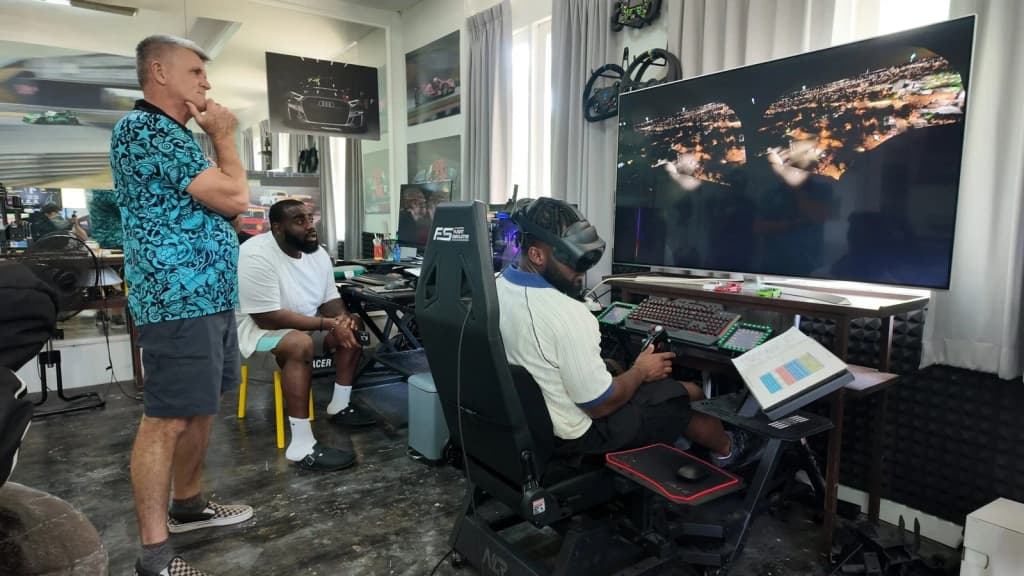
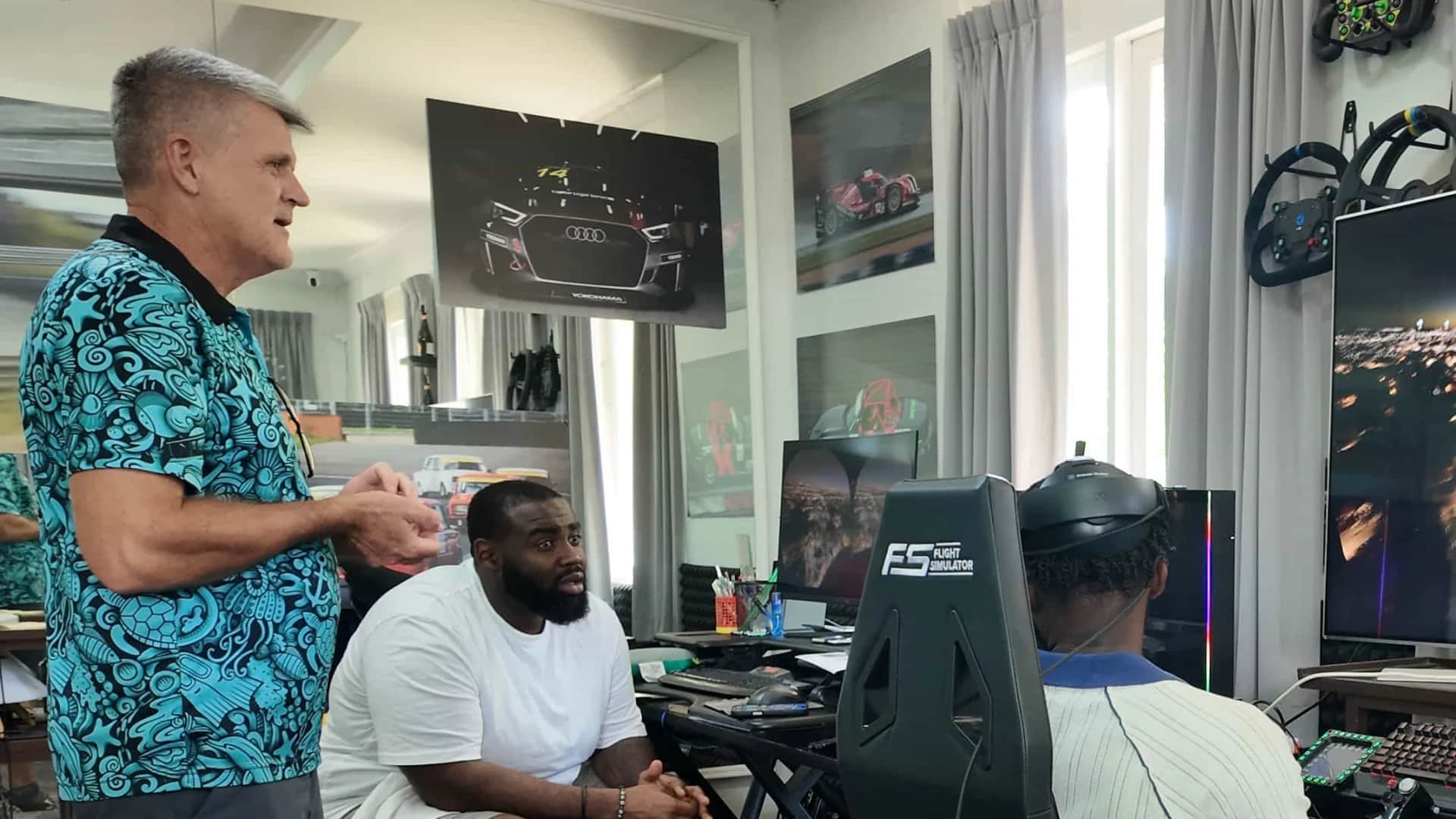
PPL & CPL procedural training at SIMPRO follows the briefing–flying–debrief structure that airlines use the briefing–flying–debrief structure that airlines use for type-rating training. The structure matters because the briefing primes you for what you’re about to practise, and the debrief converts practice into learning you retain.
| Phase | Duration | What Happens |
|---|---|---|
| Briefing | 5 min | Instructor sets the lesson objective — e.g., engine failure on climb-out, missed approach, IFR scan under partial panel. Walks through the procedure step-by-step on the whiteboard before you sit in the sim. |
| Simulator Flying | 45 min | You fly the procedure repeatedly. Instructor freezes the sim to point out errors in real time, repositions for another attempt, varies the scenario. Volume of repetition is the value — the same scenario 5–8 times in 60 minutes. |
| Debrief | 10 min | Review specific flight data, identify root causes of errors, agree on what to work on next session. This is the conversion of practice into retained learning. |
The 5 Procedures Most New Pilots Fail First — and Why the Sim Fixes Them Faster
After 23 years in aviation and thousands of training hours logged as a Chief Pilot, certain failure patterns repeat across nearly every trainee. The sim solves all five faster than aircraft time — because it lets you face the failure 6–8 times in one 60-minute session.
| Procedure | Why It's Hard — and Why the Sim Fixes It Faster |
|---|---|
| Engine failure on takeoff | The abort-or-continue decision must be made in ~2 seconds. Most trainees freeze on the first attempt. The sim lets you face it 6 times in one session until the response is automatic. |
| Crosswind landing | Coordinated rudder and aileron during the flare is the most non-intuitive skill in basic flight. Sim repetition at varied crosswind intensities builds the motor pattern faster — without the cost of a go-around every attempt. |
| Radio calls under workload | Processing phraseology + instruction + readback while flying is high cognitive load. Sim sessions remove the mental block so aircraft hours are spent on aircraft skills, not radio anxiety. |
| Instrument scan under partial panel | When the attitude indicator fails, you reconstruct attitude from secondary instruments. Real-aircraft training rarely simulates this safely — the sim does it repeatedly with different failures each time. |
| Missed approach | The transition from landing mindset to climb mindset — while reconfiguring the aircraft and reading the missed approach procedure — is information-overload for new IFR pilots. Sim repetition makes the workflow automatic. |
PPL & CPL Procedural Simulator Training — Phuket
Book Your 60-Minute Session
1,300 THB · Briefing + Simulator + Debrief
Includes 7% Thai VAT and 3% booking fee
23 Boat Lagoon Marina, Soho Pool Club, Moo 2, Ko Kaeo, Phuket 83000 · 15 min from Phuket International Airport
How PPL & CPL Procedural Training Hours Count Toward Your Licence
This is the regulatory information most flight schools don’t explain clearly. Different civil aviation authorities have different rules, but the consistent principle is: simulator hours count, and the better the simulator class, the more they count. This is exactly where PPL & CPL procedural training pays for itself.
| Authority | Towards PPL | Towards CPL | Notes |
|---|---|---|---|
| CAAT (Thailand) | Up to 5 hrs | Up to 10 hrs | Relevant to SIMPRO clients training in Thailand. Confirm with your CFI. Additional credit available for IR add-on. |
| EASA (Europe) | Up to 5 hrs | 5 hrs (Modular); up to 40 hrs IR | ATPL Integrated route allows up to 100 hrs sim credit — most generous globally. |
| FAA (USA) | Up to 2.5 hrs | Up to 50 hrs | 14 CFR Part 61. Part 141 schools may credit more depending on simulator approval level. |
| The practical takeaway: every approved sim hour at 1,300 THB is an aircraft hour you don't pay for. Aircraft hours in Thailand average 8,500–10,000 THB after fuel, instructor, and landing fees. | |||
Who PPL & CPL Procedural Training Is Right For
- PPL-track candidates — arrive at each aircraft lesson with procedures already in muscle memory.
- CPL students preparing for cross-country, night, and instrument requirements.
- ATPL students mid-theory who need to practise IFR procedures and instrument scanning.
- Licensed pilots staying current — fortnightly procedural sessions at a fraction of aircraft cost.
- Recurrent training before a check-ride — 4–6 focused sessions on examiner procedures.
- Returning pilots after a break — re-enter procedures safely without aircraft solo cost.
Frequently Asked Questions
Save 4,000–6,000 THB per substituted aircraft hour
Book a Procedural Sim Session
1,300 THB · PPL / CPL / Current · Includes 7% VAT + 3% booking fee
23 Boat Lagoon Marina, Soho Pool Club, Ko Kaeo, Phuket 83000
Related Reading at SIMPRO Academy Phuket
|
The 7 Frustrations Every Pilot Has with Flight Simulation Training Honest answers from a 23-year airline captain — vestibular mismatch, sim hours, landings, radio calls, and more. Fast-Tracking Your Aviation Career in 2026 The complete pathway from first sim session to First Officer — timeline, costs, Asia-Pacific cadet programme overview. VR & Haptics Improve Awareness in Sim Racing Phuket Training How spatial awareness technology works across both aviation and racing simulation at SIMPRO. |
Sources & Regulatory References
- CAAT — Civil Aviation Authority of Thailand — Thai national authority for pilot licensing and simulator approvals
- FAA 14 CFR Part 61 — US pilot certification rules and approved flight simulator time
- SKYbrary — Threat and Error Management (TEM) — framework behind the briefing–flying–debrief methodology
- PPL-track candidates — arrive at each aircraft lesson with procedures already in muscle memory.
- CPL students preparing for cross-country, night, and instrument requirements.
- ATPL students mid-theory who need to practise IFR procedures and instrument scanning.
- Licensed pilots staying current — fortnightly procedural sessions at a fraction of aircraft cost.
- Recurrent training before a check-ride — 4–6 focused sessions on examiner procedures.
- Returning pilots after a break — re-enter procedures safely without aircraft solo cost.
ABOUT THE AUTHOR Paul Chappell — Founder & Operator, SIMPRO Academy Phuket Paul Chappell is Founder and Operator of SIMPRO Academy Phuket. With 23+ years as a professional airline pilot, including a Lead Captain position on a Boeing Business Jet where he managed flight training and checking responsibilities, Paul brings deep expertise in precision performance and simulator-based training. He has previously operated as a qualified flight instructor and has logged hundreds of hours on certified full-motion flight simulators. Beyond aviation, Paul is a lifelong motorsport enthusiast — 10+ years on high-performance motorbikes, multiple track days in an AMG 45S, a professional rally driver training course, and extensive experience on high-performance go-karts. He founded SIMPRO Academy in 2024 to bring professional-grade sim racing and flight simulation training to Southeast Asia. |