
November 15, 2025
In this comprehensive guide, we’ll take you through the essentials of getting started with flight simulation. From setting up your equipment to taking off on your first flight, we’ll cover everything you need to know to confidently take to the virtual skies.
If you’re looking for a flight simulator in Phuket, this beginner’s guide covers the essentials — and shows you where to try one in person.
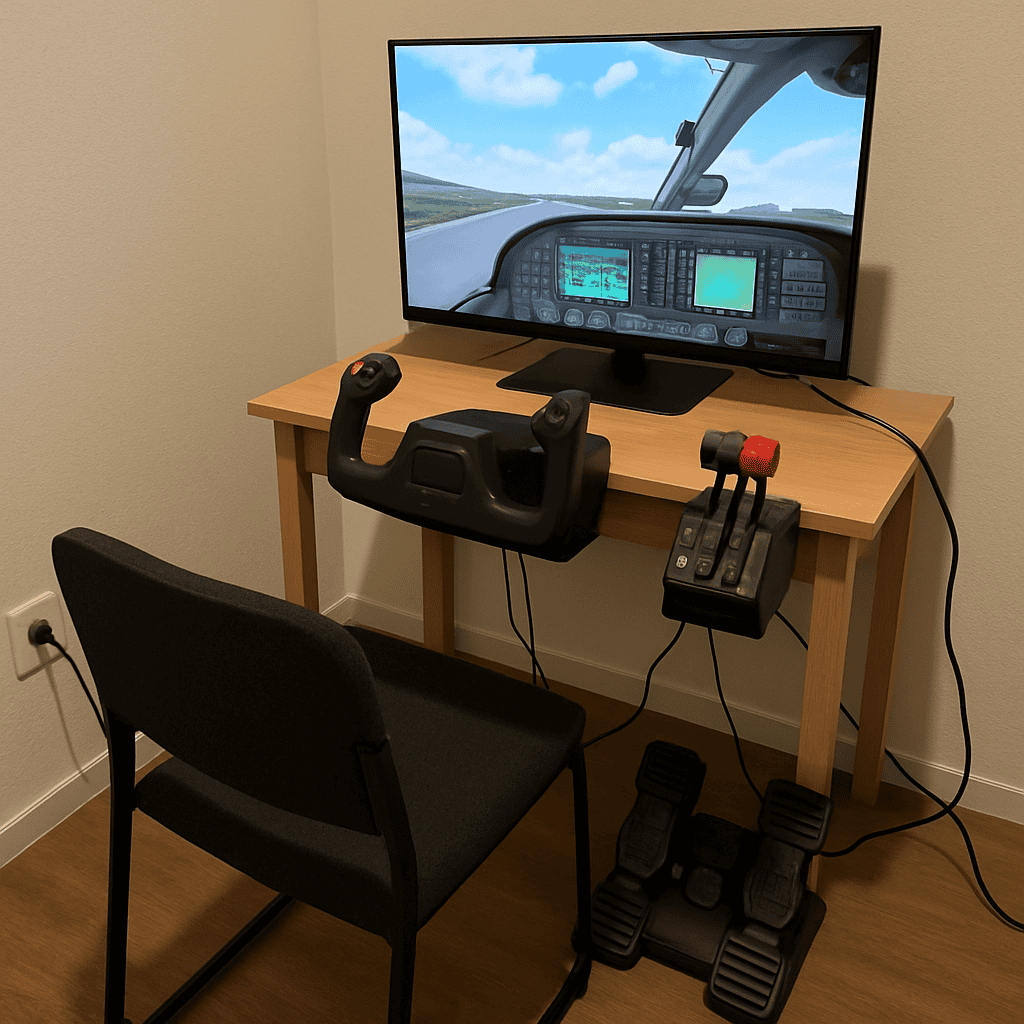
Before you dive into the world of flight simulators, it’s crucial to grasp the fundamentals. Flight simulation is a digital recreation of flying an aircraft, offering a realistic experience that mimics real-world aviation scenarios. With advanced graphics and sophisticated physics engines, today’s flight simulators provide a high degree of realism that can make you feel like you’re in the cockpit— for example, Microsoft Flight Simulator.
Table of Contents
ToggleFlight simulation has evolved significantly since its inception. Initially, it was used for military training, offering a risk-free way to train pilots. Over the years, technological advancements have transformed flight simulators into sophisticated tools used for both professional pilot training and home entertainment. Modern simulators boast realistic graphics, intricate aircraft systems, and dynamic weather conditions that mimic real-world flying, making them invaluable for learning and practice.
At the core of flight simulation is a complex blend of aerodynamics, physics, and computer programming. Simulators use aerodynamic models that replicate how an aircraft behaves in different flight conditions. Coupled with physics engines, these models ensure that every maneuver, from takeoff to landing, feels authentic. Developers also incorporate real-world data, including geographical maps and weather patterns, to enhance realism and provide pilots with a comprehensive flying experience.
Selecting the right software is the first step in your flight simulation journey. Popular options include Microsoft Flight Simulator, X-Plane, and Prepar3D, each offering unique features such as detailed aircraft models, dynamic weather conditions, and expansive world maps. Consider your budget, system requirements, and personal preferences when choosing a simulator.
Microsoft Flight Simulator is known for its stunning graphics and global coverage, X-Plane boasts highly accurate flight dynamics, and Prepar3D is favored by those seeking a balance between realism and system performance.
To fully immerse yourself in the flight simulation experience, you’ll need the right equipment. A high-quality joystick or yoke, rudder pedals, and throttle quadrant can enhance your control and realism. Additionally, investing in a VR headset or multiple monitors can provide an even more immersive experience.
The choice between a joystick and a yoke depends on the type of aircraft you prefer flying. Joysticks are often used for fighter jets and helicopters, offering precise control and a compact setup. Yokes, on the other hand, are ideal for simulating commercial and general aviation aircraft, providing a realistic feel for those types of planes.
Rudder pedals are essential for controlling the aircraft’s yaw, especially during takeoff and landing. They add an extra layer of realism and control precision. Throttle quadrants allow for more accurate power adjustments, especially in multi-engine aircraft, where managing individual engine thrust is crucial for a realistic experience.
For those seeking the ultimate immersive experience, consider expanding your setup with additional monitors or a VR headset. Multiple screens can offer a panoramic view of the cockpit and surrounding environment, while VR headsets transport you directly into the pilot’s seat, offering unparalleled realism and situational awareness.
Now that you’re equipped with the basics, it’s time to embark on your first flight. Follow these steps to ensure a smooth takeoff and landing.
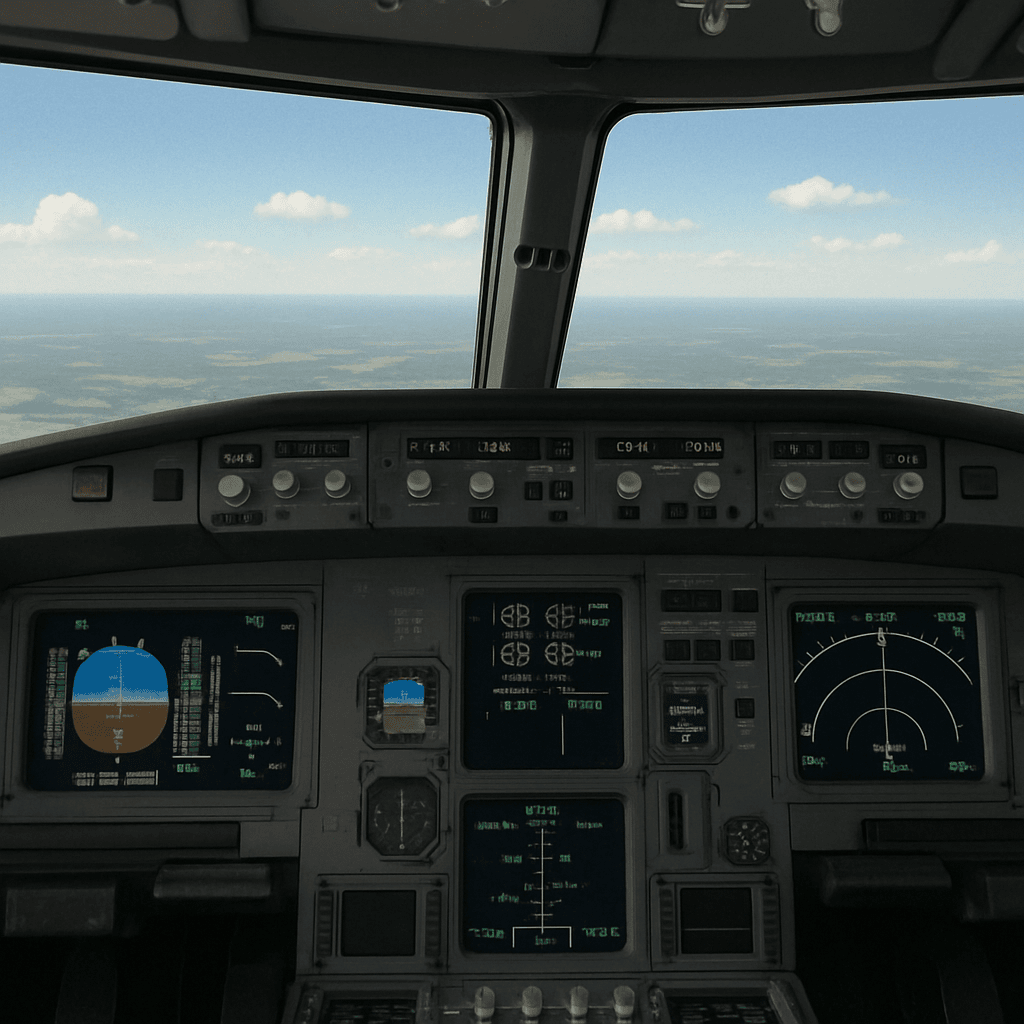
Once you’re in the virtual cockpit, take some time to familiarize yourself with the controls and instruments. The primary instruments you’ll need include the airspeed indicator, altimeter, and attitude indicator. Understanding these will help you maintain control of your aircraft during flight.
The airspeed indicator shows your current speed, crucial for maintaining control and avoiding stalls. The altimeter indicates your altitude, essential for ensuring you remain within safe flying limits. The attitude indicator provides visual cues about your aircraft’s orientation relative to the horizon, helping you maintain level flight.
Spend some time exploring the cockpit layout to understand where each instrument and control is located. Familiarize yourself with the throttle, flaps, and trim controls, as these will be essential during various flight phases. Knowing your cockpit layout will reduce the time you spend looking for controls during critical moments.
Developing the habit of regularly monitoring your instruments is vital for maintaining situational awareness. Practice scanning your instruments in a systematic order, ensuring you continuously receive important flight information without fixating on any single instrument.
Congratulations, you’re airborne! As you ascend, focus on maintaining a steady climb and keeping the aircraft level. Use small, smooth inputs on the controls to avoid overcorrection.

Most first-time flight-sim pilots lose their first hour to the same handful of errors. Knowing them in advance saves a lot of frustration.
Flight simulation is the use of advanced software and hardware to recreate the experience of flying an aircraft. Modern simulators use real-world aerodynamics, aircraft systems, and weather data to deliver a highly authentic experience. From cockpit controls to flight dynamics, today’s simulators make you feel like you’re truly in the pilot’s seat — offering both entertainment and genuine aviation training value.
Not at all! Flight simulation at SIMPRO Academy Phuket is designed for everyone — from complete beginners to aviation enthusiasts. Our instructors guide you through every step, from understanding cockpit instruments to performing smooth takeoffs and landings. You don’t need any prior flying knowledge — just curiosity and enthusiasm.
Yes, it can be an excellent stepping stone toward real-world aviation. Flight simulators teach core flying skills such as instrument reading, navigation, and situational awareness. While a simulator cannot replace licensed pilot training, it helps build strong foundational knowledge and confidence before transitioning to real aircraft.
Our setups feature professional-grade controls — including yokes, throttle quadrants, and rudder pedals — paired with high-fidelity visuals and motion feedback systems. This combination allows you to experience realistic flight conditions, from turbulence to smooth cruising. We handle all the technical setup for you, so you can focus entirely on the flying experience.
At SIMPRO Academy Phuket, you can pilot a variety of aircraft — from small training planes like the Cessna 172 to large commercial jets and even advanced military aircraft. Each simulation is tailored to your skill level and interests, allowing you to explore different flight styles and environments.
Absolutely. Flight simulation is both fun and educational, making it a great activity for families and younger aviation fans. We offer age-appropriate guidance and simplified controls for kids, ensuring a safe and enjoyable introduction to the world of flying. It’s an ideal experience for anyone curious about aviation, regardless of age.
At SIMPRO Academy Phuket, a standard flight simulation session lasts 60 minutes. This duration allows enough time for a full aviation experience — from pre-flight briefing and cockpit familiarization to takeoff, in-flight maneuvers, and landing. It’s long enough for you to learn key flight concepts while still keeping the session engaging and enjoyable. For those looking to dive deeper, extended coaching sessions and multi-flight programs are also available..
Flight simulators provide a safe, cost-effective environment to learn essential piloting skills without the risks of real-world flying. You’ll improve your coordination, decision-making, and understanding of flight mechanics. They’re also great for stress-free repetition — you can practice difficult maneuvers as many times as you need until you master them.
Unlike typical gaming or software-based setups, SIMPRO Academy Phuket offers a coaching-driven, hands-on aviation experience. We don’t develop or sell software — we create an immersive environment where you can learn, train, and enjoy. Our professional-grade simulators, personalized guidance, and passion for aviation make us the go-to destination for anyone wanting to experience flight like a real pilot.
SIMPRO Academy Phuket is an excellent place to begin flight simulation because it combines realistic technology, professional equipment, and personalized instruction to make flying accessible and enjoyable for everyone.
Our simulators feature Thrustmaster flight controls, Moza flight sticks, and F5 flight simulator seats, along with high-quality VR headsets that provide a fully immersive 360° cockpit view. This setup replicates the feel of real aircraft, letting beginners experience authentic takeoffs, landings, and navigation in a safe, comfortable environment.
What truly sets SIMPRO apart is our beginner-friendly approach. Our instructors guide you step by step through the basics — from understanding flight instruments and throttle control to mastering smooth takeoffs and landings — ensuring you learn at your own pace. Each session is designed to be both educational and fun, helping you build confidence and foundational aviation knowledge.
Whether you’re completely new to flying or exploring aviation as a hobby, SIMPRO Academy Phuket offers the perfect mix of realism, support, and excitement, making it the ideal place to start your flight simulation journey.
No. Sessions at SIMPRO Academy are beginner-friendly and fully guided — your instructor sets up the aircraft, walks you through the controls, and stays with you throughout. Complete beginners and experienced simmers are equally welcome.
Flight simulation at SIMPRO is coached by Paul Chappell, a professional airline pilot with more than 23 years of experience, a qualified Flight Instructor and Lead Captain rated on the Boeing Business Jet — with thousands of hours in full-motion flight simulators. That means the guidance you get isn’t from a hobbyist reading a manual; it’s from someone who trains in simulators for a living and can explain why an aircraft behaves the way it does.
Reach Paul: info@simproacademyphuket.com | +66 62 962 2822
Leave a Comment: