
August 17, 2026

The Microsoft Flight Simulator update landed worldwide on 14 August 2026, when Sim Update 6 (version 1.8.14.0) shipped for Microsoft Flight Simulator 2024, bringing back bush trips, adding Nvidia DLSS 4.5 support and reworking the reward-screen visuals in World Photographer mode (source: Threshold, Microsoft Flight Simulator Forums). It is a modest-sounding patch note on paper, but the Microsoft Flight Simulator update lands at a moment when flight simulation of every kind — from a living-room joystick rig to a professional training centre — is being pulled along by the same undercurrent: a global pilot shortage that Boeing says will require roughly 674,000 new pilots worldwide over the next 20 years (source: Boeing Pilot and Technician Outlook, The Flight Brief). At SIMPRO Academy Phuket, where guests fly a professional-grade flight simulator rig combining a VR headset with a 55-inch LG display, the Microsoft Flight Simulator update is a reminder that consumer software and professional training equipment are answering the very same appetite for realistic, hands-on flight experience.
For a career airline pilot, the timing is hard to ignore. I spent 23+ years flying commercially, including a spell as Lead Captain on a Boeing Business Jet managing flight training and checking standards, and I have watched consumer flight simulation close the visual and procedural gap with the professional-grade equipment airlines use to train real crews. The Microsoft Flight Simulator update is built for hobbyists at home, but the same appetite for realism is what brings tourists and lifelong aviation fans through our doors at Boat Lagoon Marina every week — whether they are killing time before a flight out of Phuket International or ticking off a long-held ambition to sit at the controls of something that actually feels real.
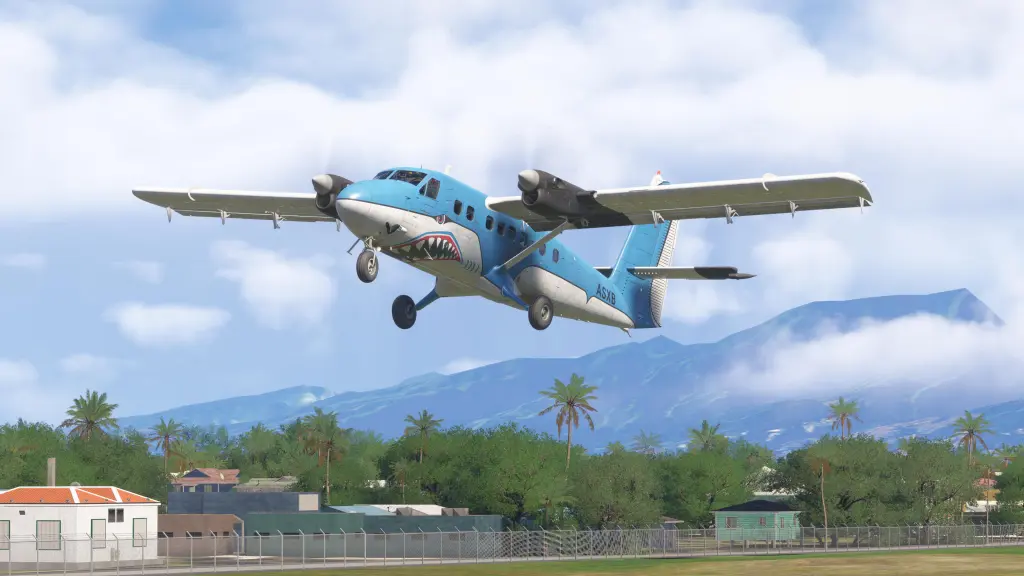
Sim Update 6 is the sixth major content and stability update since Microsoft Flight Simulator 2024 launched, and Asobo Studio and Microsoft packed in a wide spread of changes rather than one headline feature. Bush trips — the guided backcountry flying campaigns absent from MSFS 2024 at launch — are back, alongside a new guided-tours section and the option to disable the mandatory walkaround inspection in Free Flight mode for pilots who just want to get airborne (source: Microsoft Flight Simulator Forums release notes, FSElite). The Boeing 707-320C received a significant rework, the World Photographer mode’s reward screen was visually overhauled, and building-related loading times were reduced when restarting a flight or mission (source: Threshold).
On the hardware side, the Microsoft Flight Simulator update adds native support for Nvidia’s DLSS 4.5 upscaling and Dynamic Frame Generation, a meaningful frame-rate gain for anyone running the sim on recent GeForce cards (source: Windows Central, MSFS Addons). Not every graphics vendor came out ahead: AMD’s FSR4 upscaling technology was tested during the Sim Update 6 beta but did not survive into the public release, leaving Radeon owners waiting for a later patch (source: MSFS Addons, Windows Central). A PlayStation 5 crash tied to procedural building generation was also fixed, alongside what Microsoft describes as thousands of smaller stability and performance corrections across the sim (source: Microsoft Flight Simulator Forums).
Sim Update 6 is a consumer software patch, but it landed inside a much bigger structural shift in flight simulation. The global flight simulator market is valued at US$7.4 billion in 2026 and is projected to reach US$11.3 billion by 2033, a 6.2% compound annual growth rate, according to Persistence Market Research (source: Persistence Market Research). The firm’s own analysis is blunt about the driver: rising global air traffic, a critical shortage of qualified pilots, and intensifying military modernisation programmes are collectively pushing sustained demand for advanced flight simulation solutions.
That shortage is not an abstraction. Boeing’s 2026 Pilot and Technician Outlook projects the industry will need roughly 674,000 new commercial pilots over the next 20 years, part of a wider 2.4 million-person demand for pilots, maintenance technicians and cabin crew combined (source: Boeing, The Flight Brief). More than half of that demand sits in Asia-Pacific, where aviation analysts expect staffing needs to more than triple as low-cost carriers and regional connectivity expand (source: Boeing Pilot and Technician Outlook). Every regulator-mandated hour of that training happens in a simulator long before a cadet ever touches a real aircraft — exactly why global simulator demand keeps climbing in lockstep with the pilot pipeline the industry is racing to fill.
You do not need a home cockpit or a gaming PC tuned for the latest Microsoft Flight Simulator update to feel what real flight training is like — SIMPRO Academy Phuket, at Boat Lagoon Marina, was built to put a professional-grade version of that experience in front of anyone who walks through the door. Our flight simulator sessions pair a VR headset with a 55-inch LG display, giving pilots the depth and field-of-view immersion of full VR while a coach follows along on the big screen in real time — a very different feeling from the flat monitor most home MSFS setups rely on. In more than two decades of managing flight training and checking programmes, including on a Boeing Business Jet, I have watched complete beginners and enthusiasts who have logged hundreds of hours on Microsoft Flight Simulator turn a stressful, unfamiliar procedure into a calm, repeatable skill through structured simulator repetition with a coach alongside them.
It is a genuinely different experience for the two audiences who walk through our door. Tourists visiting Phuket who have never touched a flight deck get a guided, no-pressure introduction to instrument flying and procedure; aviation enthusiasts who have followed every Microsoft Flight Simulator update since Sim Update 1 get to feel how a professional-grade rig differs from even the best home setup — sharper visual reference, precise control feel, and a coach who can explain exactly why an approach did or did not work.
Fly a Professional-Grade Flight Simulator in Phuket
Standard sim sessions at SIMPRO Academy Phuket are 1,300 THB per 60 minutes (add 30 minutes for +500 THB, 1,800 THB total), or upgrade to 1-on-1 coaching for 2,000 THB per hour — both prices are all-inclusive (7% VAT and 3% booking fee included, no extra charges beyond the stated extension fee). Sessions run on a professional-grade flight simulator rig combining a VR headset with a 55-inch LG display at 23 Boat Lagoon Marina, Phuket.
Book now: simproacademyphuket.com/racing-and-flight-simulation-experiences | Call: +66 62 962 2822 | Email: info@simproacademyphuket.com
Two threads are worth following after this Microsoft Flight Simulator update. First, AMD Radeon owners are still waiting on FSR4 support after it was pulled from the Sim Update 6 beta, and Microsoft has not committed to a firm date for when — or whether — it returns in a later patch (source: MSFS Addons). Second, the same week Sim Update 6 shipped, Farnborough International Airshow 2026 closed as the biggest edition in the show’s 78-year history, with more than $84.7 billion in commercial deals and a landmark public eVTOL transition flight from Vertical Aerospace — a reminder that the aircraft consumer flight simmers fly virtually today are being redesigned in real life faster than ever.
For Phuket specifically, the pilot-shortage story has a direct local angle: Asia-Pacific’s aviation workforce gap is one of the fastest-growing in the world, and flight simulator centres across the region are positioning themselves as the accessible entry point for a new generation of pilots and enthusiasts alike. Whether Sim Update 6 is the last major patch before Microsoft turns attention to a future update or a new aircraft pack, the underlying trend is not going away: flight simulation, consumer and professional alike, is one of the fastest-growing corners of aviation right now.
Sim Update 6 (version 1.8.14.0), released 14 August 2026, brought back bush trips, added Nvidia DLSS 4.5 and Dynamic Frame Generation support, reworked the Boeing 707-320C, overhauled the World Photographer reward screen, added a guided-tours section and a walkaround-disable option, and fixed a PlayStation 5 crash tied to procedural building generation.
SIMPRO Academy Phuket runs a professional-grade flight simulator rig combining a VR headset with a 55-inch LG display rather than a specific consumer title — the same immersive, instructor-led environment airline training departments use, adapted for visitors and enthusiasts in Phuket. It is a natural next step for anyone who has enjoyed Microsoft Flight Simulator at home and wants to try a coached, professional-grade session.
The flight simulator market is valued at US$7.4 billion in 2026 and projected to reach US$11.3 billion by 2033, a 6.2% compound annual growth rate, driven mainly by a global pilot shortage. Boeing projects the industry will need roughly 674,000 new pilots over the next 20 years, more than half of them in Asia-Pacific, which keeps regulator-mandated simulator training in high demand.
Yes. SIMPRO Academy Phuket at 23 Boat Lagoon Marina welcomes tourists and aviation enthusiasts for coached flight simulator sessions on a professional-grade rig. Standard sessions are 1,300 THB per 60 minutes (add 30 minutes for +500 THB), and 1-on-1 coaching is 2,000 THB per hour — both all-inclusive.
The numbers behind the Microsoft Flight Simulator update story, at a glance:
| Metric | Figure | Source |
|---|---|---|
| Global flight simulator market (2026) | US$7.4 billion | Persistence Market Research |
| Projected market size (2033) | US$11.3 billion | Persistence Market Research |
| CAGR (2026-2033) | 6.2% | Persistence Market Research |
| New pilots needed globally (20-yr) | ~674,000 | Boeing Pilot and Technician Outlook |
| Total new aviation personnel (20-yr) | ~2.4 million | Boeing |
| Asia-Pacific share of new pilot demand | >50% | Boeing / The Flight Brief |
| Sim Update 6 version | 1.8.14.0 | Microsoft Flight Simulator Forums |
| Sim Update 6 release date | 14 August 2026 | Threshold, FSElite |
Paul Chappell is Founder and Operator of SIMPRO Academy Phuket. With 23+ years as a professional airline pilot, including a Lead Captain position on a Boeing Business Jet where he managed flight training and checking responsibilities, Paul brings deep expertise in precision performance and simulator-based training. He is a Qualified Flight Instructor with thousands of hours on certified full-motion flight simulators. Beyond aviation, Paul is a lifelong motorsport enthusiast — 10+ years on high-performance motorbikes, multiple track days in an AMG 45S, a professional rally driver training course, and extensive go-kart racing. He founded SIMPRO Academy in 2024 to bring professional-grade sim racing and flight simulation training to Southeast Asia.
Book Your Session at SIMPRO Academy Phuket
23 Boat Lagoon Marina, Soho Pool Club, Moo 2, Koh Kaeo, Ampur Mueang, Phuket 83000. Standard sim sessions: 1,300 THB per 60 minutes (add 30 minutes for +500 THB, 1,800 THB total). 1-on-1 coaching: 2,000 THB per hour. Both all-inclusive (7% VAT and 3% booking fee included).
Book now: simproacademyphuket.com/racing-and-flight-simulation-experiences | Call: +66 62 962 2822 | Email: info@simproacademyphuket.com
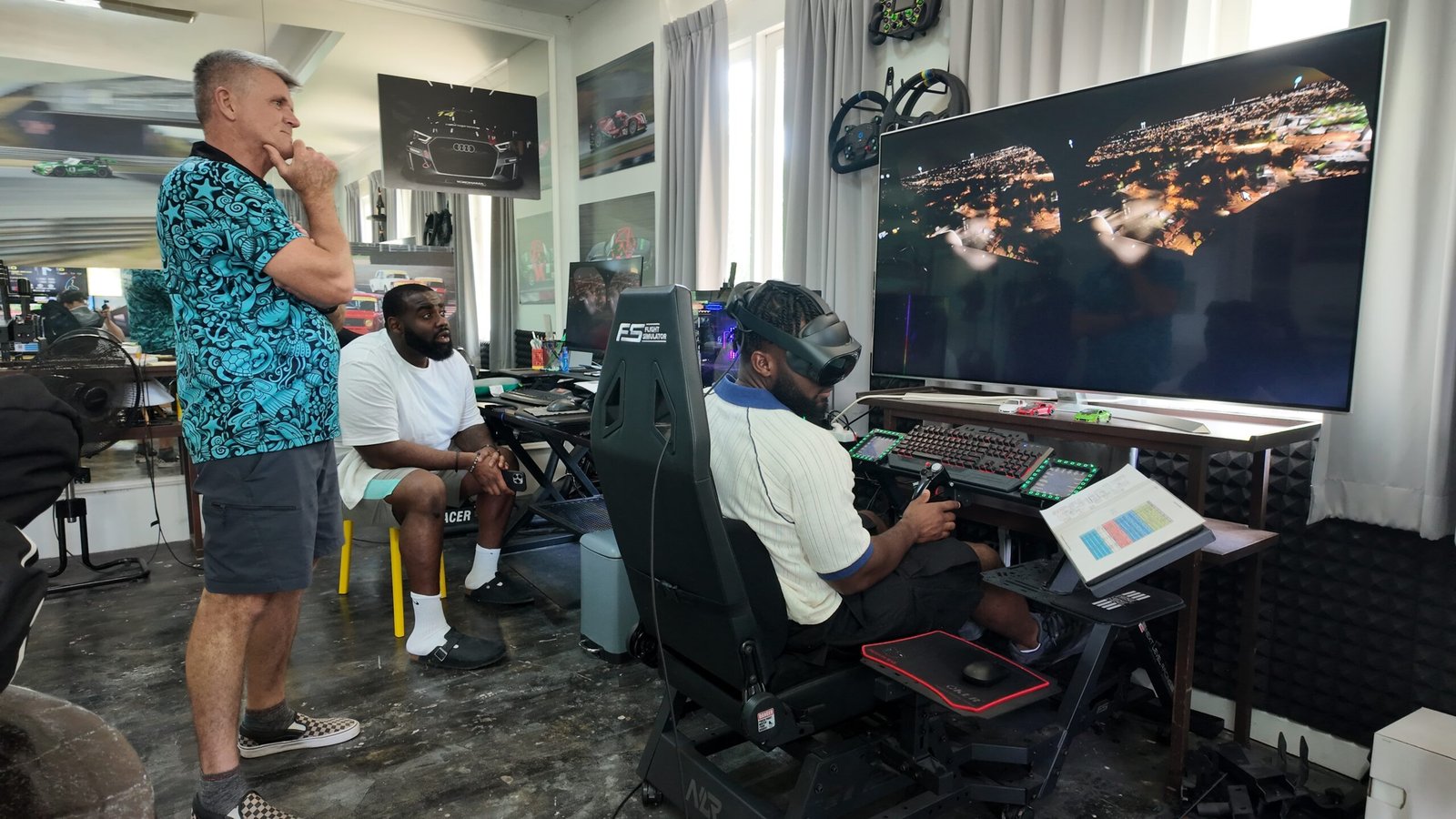 SIMPRO Academy Phuket’s VR headset and 55-inch LG display bring the Microsoft Flight Simulator update era to life.
Leave a Comment: